
Frequently Asked Questions
-
A Legacy Portrait is a one-of-a-kind photograph created using the historic wet plate collodion process, a technique dating back to the 1851 invented by Frederick Scott Archer. With the process being more commonly known as a tintype or ferrotype.
Unlike digital images, each tintype is made by hand and captured directly onto a piece of blackened metal, creating a unique physical artifact that cannot be exactly replicated.
In a world filled with smartphone photos and AI-generated images our Legacy Portraits are created using wet plate collodion photography which offers something different. A tangible portrait with depth, character, and permanence. The process itself is part of the experience, allowing you to watch your image emerge by hand just moments after it is captured.
-
Yes, absolutely. These marks are a natural part of the process and one of the qualities that makes each portrait unique.
Because every plate is handcrafted by hand using the historic wet plate collodion process, subtle imperfections such as chemical marks, streaks, edge artifacts, tiny particles, or variations in tone can appear in the final image. These characteristics are not considered flaws they are part of the artistry and authenticity of the process.
Just as no two fingerprints are the same, no two photographs are identical. These distinctive details help give each portrait its character and make it a truly one-of-a-kind heirloom.
-
The wet plate process is sensitive to UV light, it is orthochromatic, which means it sees colour very differently to what you would expect from traditional black and white film photography. Reds, oranges, and yellow tones are rendered very dark and near black, while blue and violet tones are rendered near white.
With black and white film, an image is captured on light-sensitive film, developed into a negative, and either digitally scanned or printed. In wet plate collodion photography is a direct positive process using a chemical process that must be completed in real time. This eliminates the negative entirely and makes each finished plate unique, with subtle variations that reflect the handmade process.
-
Clothing with texture and detail tends to photograph beautifully. You can wear anything you feel comfortable and confident in. You can dress up or dress down as much as you’d like to create a photograph that best represents who you are.
Bringing a few outfit options or small accessories, such as a hat or jewelry, is encouraged. Even subtle details can add depth and interest to your portrait.
The final image is reversed, so any visible text or logos will appear backwards. It is advise to avoid wearing any clothing with text.
Because the process is sensitive to UV light and is orthochromatic, it responds to colours differently than modern photography. Shades of blue and violet can appear very bright, while reds, oranges, and yellows can appear much darker. Something to keep in mind in regards to makeup, specifically for lipstick and eyeliner.
Glasses with a UV coating can sometimes cause the lenses to darken. This effect is often subtle, but in some cases it may give the lenses a slightly smoky appearance similar to a pair of sunglasses.
-
Absolutely! Personal items are encouraged, especially those that hold meaning or reflect who you are. Instruments, heirlooms, or objects tied to your story can add depth and character to your portrait.
These elements don’t just enhance the image they help tell something personal, creating a Legacy Portrait that feels more like a reflection of you, and less like a simple photograph.
-
Come ready to slow down and stay curious. As each image is created, you’ll gain a deeper appreciation for the historic process behind it.
This is a quieter, more intentional and intimate experience one where we work together to create something meaningful. Allowing yourself to settle into the pace of it all will lead to a more natural, relaxed, and lasting portrait.
-
Unlike digital photography, wet plate collodion photographs aren’t resized or cropped after the fact. Each image is created directly onto a metal plate inside a camera, which means the final size is determined by the camera itself.
Larger plates require larger cameras, lenses, brighter lights, all of which shape the experience and the final result.
Available sizes include 4×5”, 5×7”, and 8×10”.
-
Each session begins with a flat rate of $300.
With a $100 booking fee is required to secure your session date. The remaining balance of $200 is due on the day of the session.
Cancellations made 48 hours or more before your session will receive a full refund of the booking fee.
There are 3 package options which vary in the size and number of plates. The Trio with three 4×5 plates, The Duo with two 5×7 plates, and The Single one 8×10 plate.
There’s no pressure to decide everything in advance many clients choose to add more or choose different sizes once they see their first portrait come to life.
Additional plates may be created and purchased during your session, offering the opportunity to preserve multiple moments. Each additional plate requires time to craft, and will extend your session accordingly.
| Additional 4×5 plates: $75 | Additional 5×7 plates: $125 | Additional 8×10 plates: $200 |
-
I will re-shoot at no extra cost If anything technical interferes with your portrait such as blinking, or a rare chemical irregularity, the plate will be remade at no additional cost.
If you don’t like your expression, hair, clothing or if you are really particular about something I can re-shoot for a $30 fee (per plate) to cover material and chemistry costs.
-
Sessions are typically 90 minutes. From start to finish, a single photograph takes around 20-30 minutes to make to create. That includes preparing the chemistry, capturing your portrait, developing it in the darkroom, and varnishing it for long term preservation.
Larger 8×10 plates will take a little longer due to size as it requires more processing time.
-
When the process was first developed, portraits required subjects to remain completely still for up to 15 seconds, often resulting in stiff or uneasy expressions. Today, we use high-powered flash, making exposure nearly instantaneous and far more comfortable, minus the split second when the strobe goes off!
The lighting used in this process includes a bright flash. While brief, it can be intense, so it may not be ideal for those with sensitive eyes or certain medical conditions, such as photosensitivity.
There will be a few moments where you have to remain still while the camera is focused before the plate is inserted in the camera and just before the flash goes off.
-
Yes, with a bit of care. Please let me know in advance if you wish to include them.
The only real challenge is getting them still long enough to the focus. Once that's set, the actual exposure in the studio is nearly instant, so they don't need to hold a pose for long. But even small movements can result in blur or moving out of focus. If you’re comfortable with that possibility, I’m happy to include children or pets in your session.
Pets must be well trained capable of sitting still for an extended amount of time in order to achieve the best results.
It is highly likely that for small children and pets that they will scared of the strobe when it goes off as it can be quite intense for them and get upset. So be prepared for them to react once the photo is taken.
For safety, they should also be calm and well-behaved in the studio, as there is lighting equipment and chemistry present that requires attention and care.
-
Absolutely. You’re welcome to bring a friend, partner, or family member to be part of the session.
Just let me know in advance so we can plan appropriately for composition and timing.
Plate size will influence how much detail is preserved:
4×5 plates are best suited for individual portraits
5×7 plates are an ideal starting point for two people
8×10 plates can comfortably accommodate small groups (up to 4 people) while maintaining strong detail
Choosing the right size helps ensure everyone is captured with clarity and presence in the final image.
Please note as more people are added, it becomes more difficult to keep everyone in focus, as the process naturally produces a very shallow depth of field.
-
Yes. Your plate is completed during your session and is the final step before you leave, so you’ll be able to take your portrait home the same day.
Afterward, the varnish will continue to cure fully over the next 2–3 days. While your plate is safe to handle, it’s best to wait until it has fully dried before placing it in a frame, as enclosed spaces can trap residual moisture and potentially affect the finish.
-
Your tintype is a durable piece of history, but it should be cared for. Avoid prolonged exposure to moisture and direct sunlight, and gently dust it with a microfiber cloth if needed. With proper care, it can last for generations, just like many plates from the 1850s that remain beautifully preserved today.
For display, a box frame is ideal, allowing the edges of the plate to be seen. Tintypes interact beautifully with light, so placing them in a well-lit area will enhance their depth and detail just avoid direct sunlight over time.
-
Yes absolutely! Not only will you receive the original plates themselves, but also high-resolution digital scans will be emailed to you 24 hours after your session.
-
Sessions take place in my home studio in the Southeast of Calgary. Keep in mind you will probably meet my dog Pekoe and cat Mocha during our session.
-
Yes, select on location sessions are available.
Wet plate collodion photography can be brought outside the studio, but it requires a carefully controlled setup, specialized equipment, and a suitable environment to properly execute the process. Because of this, travel sessions are limited and offered on a case‑by‑case basis.
Each location must meet specific requirements, including access to water, power, and a safe space to work with the chemistry. Additional fees apply to account for transportation, setup, and production time.
If you have a location in mind, you’re welcome to reach out. Together, we can determine what’s possible and design an experience tailored to your setting.
Colour Rendition
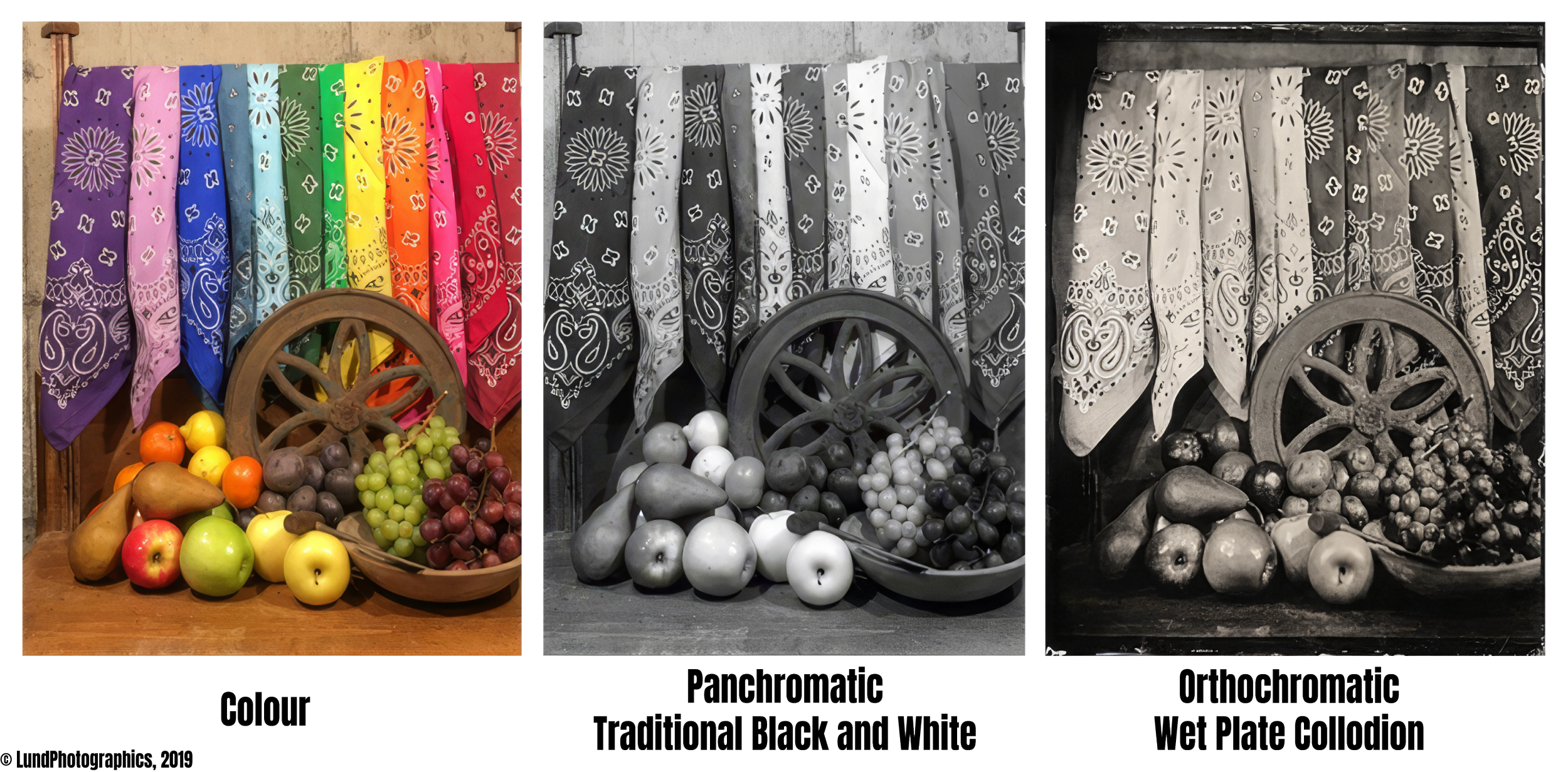
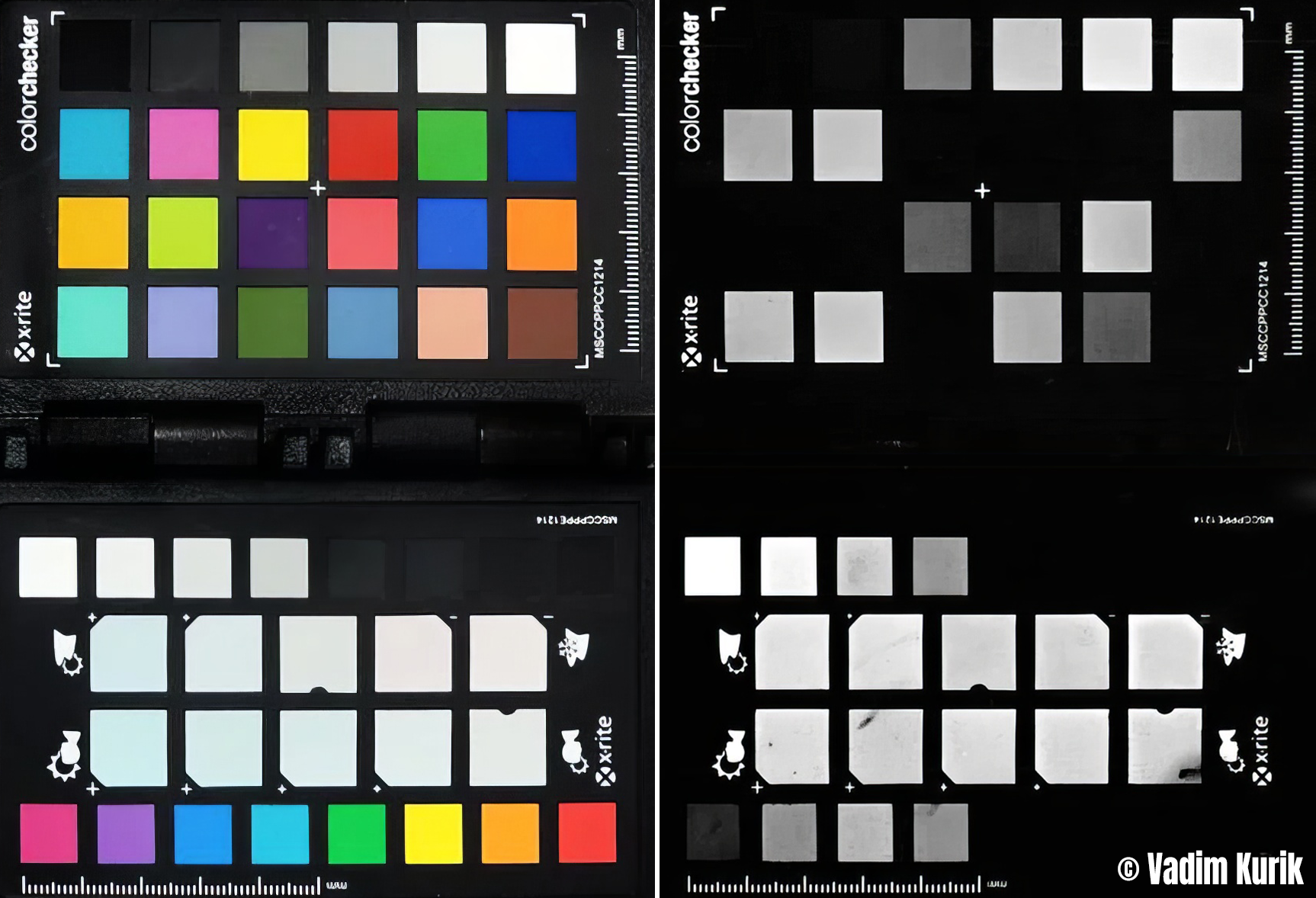
The wet plate process is orthochromatic, which means it sees colour very differently to what you would expect from traditional black and white film photography. Reds, oranges, and yellow tones are rendered very dark and, while blue and violet tones are rendered much brighter.
Please refer to the colour chart and example photo to see how different colours render, and keep this in mind when selecting clothing, accessories, and other items for your portrait session.
Textures like denim, lace, tweeds, fur, knits and layers always look great. But most importantly be comfortable and be you! This is about capturing who you are so don’t overthink it!
If possible its always best to avoid pure white clothing as those tend to get too bright and overexposed. Similarly all black clothing can appear quite dark and underexposed.
Book Your Legacy Portrait
Each portrait is handcrafted in using a historic process that cannot be rushed or mass-produced. Once booked, your session is dedicated entirely to you.
By appointment only. Availability is limited to ensure every portrait is given the time and care it deserves.
Feel free to explore my Gallery to see more examples.
If you need anymore information or have any other questions please reach out to me directly.